.png)


At Saints Peter and Paul Catholic High School, English is the cornerstone of our curriculum.
Through the power of language and literature, we aim to develop articulate, empathetic, and critically aware young people who can confidently engage with the world around them.
“Language is the road map of a culture. It tells you where its people come from and where they are going.”
Rita Mae Brown
Our English curriculum is designed to cultivate confident, articulate and thoughtful readers, writers and speakers who can engage critically with the world around them. Through the study of a rich and diverse range of literature, students develop a lifelong appreciation of language and its power to inform, inspire and challenge.
We aim to:
-
Foster a love of reading through exposure to high-quality literary and non-fiction texts.
-
Develop students’ ability to communicate effectively, accurately and creatively in both speech and writing.
-
Build the cultural capital and disciplinary knowledge needed for success in education, employment and life.
-
Equip all students, regardless of starting point, with a secure command of vocabulary, grammar and literary analysis.
-
Encourage students to explore complex ideas, perspectives and human experiences through literature.
Rooted in our Catholic ethos, the curriculum invites students to reflect on themes such as justice, compassion, dignity, forgiveness and redemption, enabling them to develop both intellectually and morally as responsible members of society.
KEY STAGE 3 (YEARS 7-9)
Our Key Stage 3 English curriculum is broad and challenging, covering a wide spectrum of texts and themes and carefully considering the knowledge and skills needed to be a successful academic, as well as a successful citizen.
We provide:
-
emphasis on reading widely and writing fluently.
-
study of poetry, plays, novels, and non-fiction.
-
introduction to classic and multicultural texts.
-
frequent vocabulary, spelling, and grammar instruction.
-
extended writing tasks to develop coherence and accuracy.
-
regular speaking and listening activities and vital opportunities for discussion to build confidence.
-
time to revisit knowledge and skills for application to a range of contexts.
-
opportunities to see patterns, appreciate deeper layers of meaning and make connections across literature, language and the media.
KEY STAGE 4 (YEARS 10-11)
At key stage 4, our text choices continue to be challenging in nature yet also broad in terms of theme, time and context, covering a range of social issues that allow our students to understand wider concepts involving class, hierarchy and social divide.
Students study for:
-
GCSE English Language (Eduqas)
-
GCSE English Literature (AQA)
Core texts include:
-
Macbeth (Shakespeare)
-
A Christmas Carol (Dickens)
-
An Inspector Calls (Priestley)
-
AQA Power & Conflict Poetry Anthology
-
19th–21st century non-fiction and unseen texts
Support and challenge are embedded, with tiered scaffolding, targeted intervention, and stretch opportunities including independent critical reading and debate and providing rich stimulus for creative/persuasive writing.
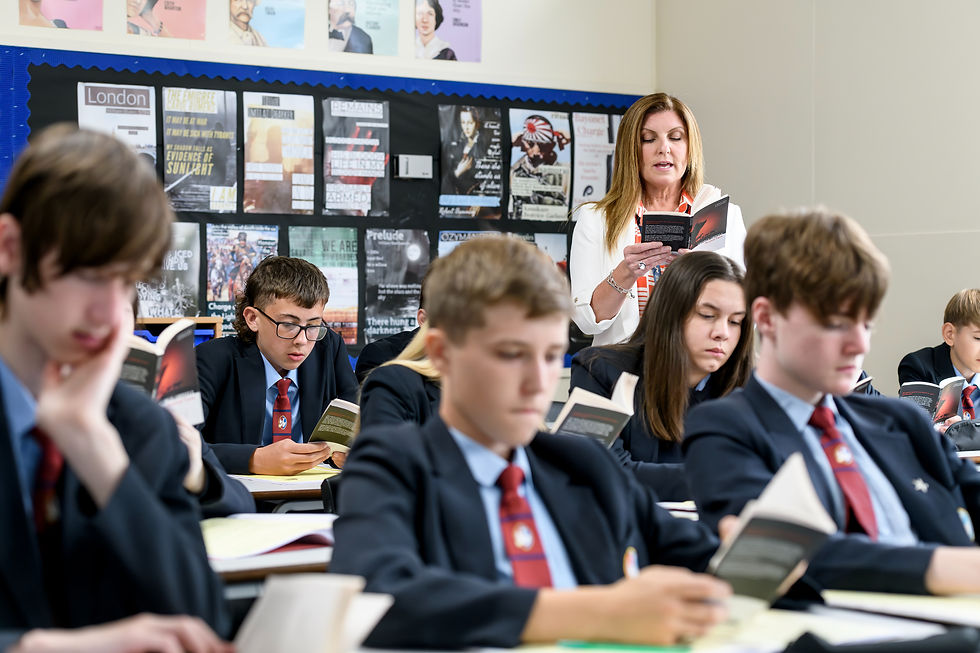
We are a reading school. Literacy is at the heart of our curriculum.
-
Reading for pleasure: Weekly DEAR (Drop Everything and Read) sessions, library access, author visits.
-
Targeted interventions: Fresh Start, Lexia, and vocabulary boosters for identified students.
-
Whole-school literacy strategies: Frayer models, oracy frameworks, tiered vocabulary teaching.
-
Parental partnerships: Reading logs, recommended reading lists, and workshops.
Our thematic approach and conceptual schema allow students to use themes to understand the human condition and make sense of the world we live in and the experiences we have.
Our English curriculum helps young people to develop moral imagination and empathy as they encounter stories of:
-
Forgiveness and redemption (A Christmas Carol)
-
Power, corruption and justice (Macbeth)
-
Prejudice and social responsibility (An Inspector Calls)
-
Identity, voice, and agency (poetry & diverse authors)
We further enrich our curriculum through:
-
Theatre trips and film studies
-
Creative writing competitions
-
World Book Day celebrations
-
Holocaust literature study and Remembrance poetry
These experiences foster spiritual growth, moral reflection, and deeper engagement with Catholic social teaching.
IMPACT
We measure our English curriculum success by:
STRONG GCSE OUTCOMES
in English Literature and Englisg Language
HIGH LEVELS OF ENGAGEMENT
with growing student confidence in speaking and writing
wider reading
Students who read widely can express nuanced ideas about complex themes.